No, you should never buy tapentadol online without a valid prescription from a licensed U.S. clinician. Buying Tapentadol Online without that prescription is not a safe or lawful way to get pain care. If pain is disrupting your sleep, work, or daily life, you deserve help without judgment.
A valid prescription and lawful pharmacy are essential, even when an online seller promises fast delivery or asks few questions. A checkout page cannot assess your health or decide whether this medicine fits your needs. Unverified offers can also leave you unsure what a tablet contains.
You can take a practical next step without deciding on treatment alone. A licensed clinician can review your pain, health history, and current medicines, then discuss suitable care. Share what you have tried and what has or has not helped.
That conversation can also clarify which release type appears on any prescription and how to use it safely. Keep the medication name, formulation, and current symptoms ready to discuss with a clinician instead of relying on an unverified checkout.
Can You Buy Tapentadol Online Without a Prescription?
In the United States, tapentadol is a Schedule II controlled substance, so an online seller cannot legally bypass the prescription requirement. Schedule II classification means a U.S. controlled-substance category for drugs with accepted medical use but high potential for abuse and dependence. A U.S. pharmacy cannot dispense it without a valid prescription from an authorized prescriber.
This rule applies when the order starts on a website, app, or other online service. An online checkout does not turn a prescription medicine into an over-the-counter product. Payment, shipping, or a seller’s promise cannot replace the required prescription.
These controlled substance regulations apply across the country, while state rules can add requirements. A state may set further limits on prescribing or dispensing. The details can depend on where you live and where the prescriber and pharmacy operate.
A website may claim that its own review process makes a prescription unnecessary. That claim does not change the pharmacy’s duty to dispense lawfully. A seller’s terms and conditions are not a substitute for U.S. law.
If you are unsure about a prescription or a state rule, ask a licensed clinician or your state’s pharmacy authority. Do not rely on a seller to explain whether its own offer is legal. Treat any no-prescription offer as a reason to stop the transaction, not as a shortcut around medical care.
Why No-RX Sellers Put Patients at Risk
A pill that looks like tapentadol may contain a different drug, including fentanyl, or an unpredictable amount of an ingredient. Unknown contents mean you cannot judge safety by color, shape, imprint, or packaging. The Drug Enforcement Administration warns that counterfeit pills sold as prescription opioids may contain fentanyl.
Fentanyl exposure can cause a fatal overdose. That warning does not mean every online pharmacy or counterfeit pill has the same contents. It means a tablet from an unverified seller cannot be confirmed by appearance alone.
An unknown dose can also cause harm, even if the active ingredient is what the seller claims. A tablet may contain too much, too little, or a mix of substances. You have no reliable way to check its contents at home.
Taking a medicine without knowing its strength can make effects hard to predict. Serious reactions may include extreme sleepiness, slow or difficult breathing, or loss of consciousness. If someone becomes hard to wake or has trouble breathing, call 911.
There may also be legal consequences when you possess medication obtained unlawfully. Rules depend on the facts and applicable law, so a seller’s assurance cannot protect you. Do not take a tablet from an unverified seller, even if its packaging or appearance seems familiar.
Ordering Through a Licensed Pharmacy
The safe online route starts with a clinician’s evaluation, not a shopping cart. Clinical review comes first, so a prescriber can assess your pain and decide whether this medicine is appropriate. A licensed U.S. clinician must issue a valid prescription before a pharmacy can dispense it.
A clinician may ask where the pain occurs, how long it has lasted, and how it affects daily tasks. Bring your health history and a list of medicines to help the clinician assess risks. An appointment does not guarantee a prescription.
From clinician evaluation to a valid prescription
If the clinician decides treatment is appropriate, the prescriber creates the prescription for a specific product and strength. The decision must reflect your individual health needs, not a seller’s menu. You can ask why a particular formulation was selected.
The Drug Enforcement Administration permits electronic prescriptions for controlled substances when federal requirements are met. Electronic transmission is a way to send a prescription, not proof that an online seller is authorized. The pharmacy still must confirm that the prescription is valid.
Some readers type “tapentadol 200 mg order online” when looking for a convenient option. Ordering 200 mg tapentadol online is lawful only when a valid prescription is dispensed through a compliant pharmacy. The strength creates no exception.
Sending the prescription for lawful dispensing
When appropriate, the prescriber can send the prescription to a pharmacy that meets applicable requirements and offers delivery. You may be able to choose a pharmacy, but confirm that it can fill the exact prescribed product. Ask the prescriber how to route the prescription if your first choice cannot fill it.
The wording “Buy Tapentadol tablets online at tapentadol.org” is appropriate only when a valid prescription is required and lawful dispensing follows. The wording alone does not establish whether a website or pharmacy meets legal requirements. Check its status independently before using it.
A delivery option does not change the need for a valid prescription or careful handling. Before submitting personal or payment information, confirm that the prescription will be handled by a pharmacy you can independently verify.
Tapentadol Prescription Requirements in the United States
A valid prescription is a clinician’s medical decision, not a form a seller can create on a buyer’s behalf. Independent clinical judgment must guide whether the medicine is suitable for you. Federal rules require controlled-substance prescriptions to serve a legitimate medical purpose in the usual course of professional practice.
The prescriber considers your symptoms, health history, and other medicines before making that decision. A website cannot replace that review by collecting answers or payment. A prescription also has to meet applicable federal and state rules.
State requirements may differ, including rules that apply to clinicians and pharmacies. The location of the patient, prescriber, and dispensing pharmacy can matter. Ask a clinician or state authority about current requirements for your situation.
Federal law does not set a universal in-person-only requirement for every telehealth situation. Rules for remote prescribing can depend on current federal and state requirements and the facts of care. Do not assume every online assessment is lawful or that every telehealth visit has the same rules.
A seller’s claim about how prescriptions work is not a reliable guide to your legal rights. Ask the prescriber or state authority rather than relying on a site that hopes to sell you the medicine. Their answer can help clarify the current rules in your state.
Federal law does not allow refills on Schedule II prescriptions. If a clinician believes continued treatment is appropriate, you need a new prescription under the rules that apply. Do not treat an old prescription as reusable, since a Schedule II prescription cannot be refilled under federal law.
Immediate-Release and Extended-Release Tablets
The release formulation matters as much as the milligram strength because immediate-release and extended-release tablets work differently. Immediate-release (IR) tablets release medicine more quickly, while extended-release (ER) tablets release it over a longer period. The two forms are not interchangeable by milligram amount.
U.S. Food and Drug Administration labeling lists IR tablets in 50 mg, 75 mg, and 100 mg strengths. ER tablets are labeled in 50 mg, 100 mg, 150 mg, 200 mg, and 250 mg strengths. Those numbers do not tell you which form was prescribed.
Immediate-release tablets and short-term dosing
Immediate-release tablets are designed to release their medicine sooner than ER tablets. A 100 mg prescription must match the prescribed release type, not just the number on the label. The same milligram amount can refer to different forms.
In U.S. labeling, 200 mg is an ER strength, not an IR strength. A search to buy tapentadol 100 mg does not tell you whether a listing matches an IR or ER prescription. Check the full product name on the prescription.
A 50 mg online listing may refer to either formulation. That shared strength makes it especially important to check the release type, not just the number. Ask the pharmacist to explain any label that does not match your prescription.
Extended-release tablets and longer-term pain management
ER tablets release medicine over a longer period and are used as part of extended-release pain management when a clinician prescribes them. Their design affects how they are taken. Follow the product instructions and the prescriber’s directions for your specific medicine.
Online searches to buy tapentadol 200 mg or buy tapentadol 50 mg online can return products with different release types. A milligram value alone cannot establish a match. Do not choose a tablet based on a search result, product photo, or seller description.
Drugs.com summarizes labeled strengths and notes that the two forms are not interchangeable in its tapentadol drug information. A pharmacist can compare the dispensed label with your prescription. Never change a release type or tablet strength based on an online listing; ask the prescriber or pharmacist to resolve any mismatch.
Medication Interactions That Need Screening
A medication review can miss a serious risk if it leaves out a sleep medicine, an occasional prescription, or alcohol use. Every substance counts, even if you take it only once in a while. Opioids combined with benzodiazepines or other central nervous system depressants can cause profound sedation and respiratory depression.
Tell the clinician about prescription medicines, over-the-counter products, supplements, and alcohol. Central nervous system depressants slow brain activity and can affect alertness or breathing. Alcohol belongs in that review, too.
Some people leave out an occasional anxiety pill or sleep aid because it is not part of a daily routine. That omission can hide a risk. Name the medicine and how often you use it, even if you have not taken it recently.
Benzodiazepines are one group that needs special attention, but they are not the only concern. Sleep medicines and other sedating drugs may also affect breathing or alertness. Tell the clinician about medicines prescribed by other providers.
Do not stop a prescribed medicine on your own to avoid a possible interaction. A clinician or pharmacist can review the full list and explain what changes, if any, are needed. Mention supplements and nonprescription products by name when you can.
Bring the actual medication containers or a current medication list to the prescribing appointment. Include how much you take and how often, along with any nonprescription sleep aid. A clear list helps prevent an occasional product from being overlooked.
Strength and Price Questions
A meaningful tapentadol price quote has to match the prescribed formulation, strength, pharmacy, and the patient’s coverage. The exact prescription matters, because a quote for one product may not apply to another. A U.S. price, including a 200 mg price, depends on the prescribed product, insurance, pharmacy, and location.
FDA labeling identifies 200 mg as an extended-release strength. A quote for that strength does not describe an immediate-release product. The price also may differ between pharmacies and locations.
Medicare Part D coverage and pharmacy networks affect a member’s prescription-drug costs. A pharmacy outside a plan’s network may be treated differently from one inside it. Plan details can also affect what you pay for a covered prescription.
For a useful quote, give the pharmacy the exact product, strength, and release type on your prescription. Share your insurance or Medicare Part D details, including the plan and pharmacy network. Ask whether the quote reflects your coverage or a cash price.
A tapentadol price in the U.S. can change with those details, so a general online figure may not fit your situation. A listed price also does not show whether the product or seller is lawful. Treat a low price as no proof of safe dispensing.
Ask the pharmacy for a current quote using your prescription and coverage details. Compare only current quotes for the exact prescribed product and never use a lower online price to justify buying without a prescription.
Checks for an Online Pharmacy
Verify the pharmacy’s credentials independently before sharing personal information or paying. Independent pharmacy verification helps you check whether a business is authorized to operate. A seller that offers controlled medicine without a prescription is a warning sign, not a legitimate shortcut.
Start with the state board of pharmacy for the state where the business operates. The National Association of Boards of Pharmacy also offers Safe Pharmacy resources to help check online pharmacy credentials. Use both to confirm the pharmacy name and status.
Confirming pharmacy credentials
Check the pharmacy itself rather than relying on a badge or seal shown on its website. Confirm that the listed business matches the board’s records and the pharmacy contact details. If those details do not match, pause before sending information.
A .pharmacy domain can be a useful credential signal, but it should not replace checking with the relevant state board and NABP Safe Pharmacy resources. A familiar web address alone cannot confirm every legal requirement. Look for a real, named pharmacy and clear contact information.
A legitimate pharmacy should require a valid prescription for this medicine. Claims that a prescription is unnecessary should end the transaction. Be wary of sites that avoid clear answers about who will dispense the order.
Recognizing suspicious payment and shipping practices
Requests for cryptocurrency, wire transfers, or gift cards are red flags. These payment methods can make a transaction hard to reverse or trace. Do not pay a seller that insists on them.
Generic encrypted-email contacts without a named pharmacist or clear phone number can also raise concern. A professional-looking site does not prove the business is licensed. Check whether the listed contact information connects to the pharmacy in the state board’s records.
Foreign shipping deserves special caution. The Drug Enforcement Administration generally prohibits importing controlled substances into the United States from foreign online sellers. Walk away if a seller asks for an unusual payment method or ships a controlled medicine from outside the United States.
Pain Treatment Options to Discuss With a Clinician
A pain plan can include more than an opioid, depending on the cause of pain and the patient’s health and goals. Nonopioid approaches are preferred for many common types of subacute and chronic pain in the CDC’s 2022 Clinical Practice Guideline. The right choice depends on your needs, past care, and treatment goals.
A clinician can review what may be causing the pain, how long it has lasted, and what makes it better or worse. Your health history and past treatment also shape the choices. A plan may use more than one approach.
Nonopioid medicines may be part of care when they fit your health needs. Ask how any option may affect other medicines or health conditions. Do not add a medicine based only on an online suggestion.
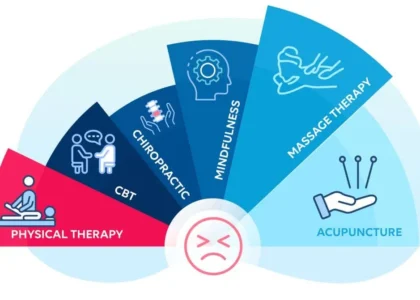
Physical therapy can help address movement and function for some pain conditions. Cognitive behavioral therapy can help you work on thoughts and habits that affect pain and daily life. A clinician can discuss whether either approach fits your situation.
Some people need a different plan because of the cause or severity of their pain, other health needs, or past response to care. The guideline does not mean every person should use the same treatment. Your clinician can explain why an option may or may not suit you.
Do not stop or replace a prescribed medicine without professional advice. Bring a short account of what worsens or relieves the pain to the appointment so the clinician can tailor the discussion.
Conclusion
Tapentadol should be obtained only through a valid prescription and a lawful dispensing channel. A licensed clinician should help plan your pain treatment, including whether this medicine fits your needs and health history.
An online offer without a prescription is not a safe route to care. If you already have a prescription, use only the product and release type it names. Ask questions if a pharmacy label or delivery does not match.
Contact a licensed U.S. clinician or pharmacist before making a treatment change, and use only the product and formulation matched to the prescription.