
For adults living with moderate to severe pain, finding an effective treatment option can feel overwhelming. Among the various prescription pain relievers available, Tapentadol stands out due to its unique way of working in the body. Unlike traditional opioids that target only one type of receptor, Tapentadol uses a dual-mechanism approach to manage pain.
This educational guide explains what Tapentadol is, how it works, when it may be prescribed, and important safety considerations. This information is for educational purposes only and does not replace professional medical advice. Always consult a licensed healthcare provider before starting or changing any pain medication.
What Is Tapentadol?
Tapentadol is a prescription opioid analgesic (pain reliever) used to treat moderate to severe pain. It is classified as a Schedule II controlled substance in the United States under the Controlled Substances Act, meaning it has a high potential for abuse, addiction, and misuse.
Tapentadol is available in two main formulations:
| Formulation | Brand Names (Examples) | Typical Use |
|---|---|---|
| Immediate-Release (IR) | Nucynta®, Aspadol, Tydol | Moderate to severe acute pain (e.g., post-surgery, injury) |
| Extended-Release (ER) | Nucynta® ER, Tapaday, Topcynta | Moderate to severe chronic pain requiring around-the-clock treatment |
Tapentadol was approved by the U.S. Food and Drug Administration (FDA) in 2008 for immediate-release and in 2011 for extended-release formulations.
How Does Tapentadol Work? The Dual-Mechanism Explained
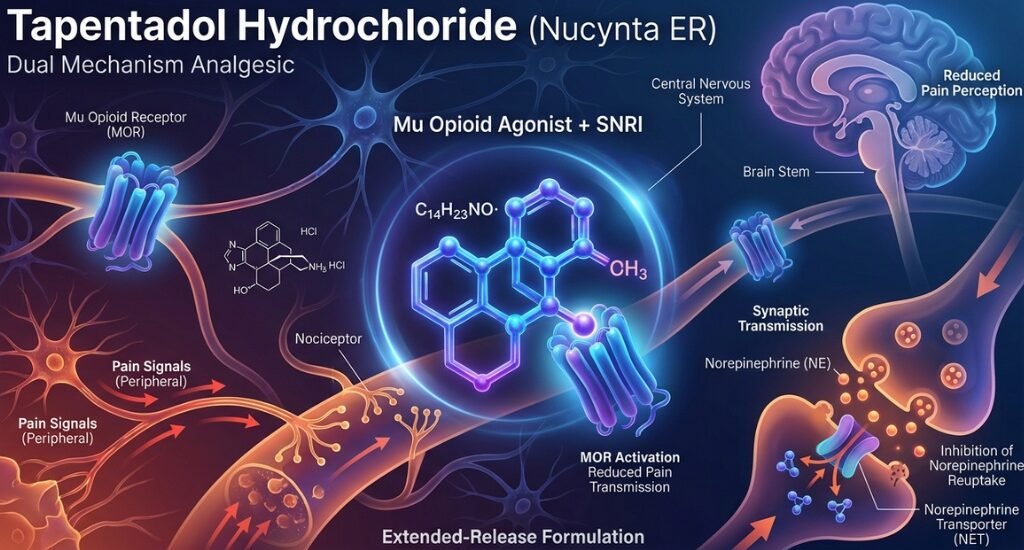
What makes Tapentadol different from many other opioids is its dual mechanism of action. It works through two complementary pathways in the central nervous system.
Mechanism 1: Mu-Opioid Receptor Agonism
Tapentadol binds to mu-opioid receptors in the brain and spinal cord. This is the same mechanism used by traditional opioids like morphine and oxycodone. When Tapentadol attaches to these receptors, it reduces the brain’s perception of pain signals.
Mechanism 2: Norepinephrine Reuptake Inhibition
In addition to opioid receptor activity, Tapentadol blocks the reuptake of norepinephrine —a natural chemical messenger in the body. By increasing norepinephrine levels in the descending pain pathways, Tapentadol helps inhibit pain signals before they reach conscious awareness.
Why Does This Matter?
The dual mechanism offers potential advantages:
- Synergistic effect – The two pathways work together, potentially providing effective pain relief at lower opioid receptor activity levels.
- May be effective for neuropathic pain – The norepinephrine component makes Tapentadol useful for certain nerve pain conditions, such as diabetic peripheral neuropathy.
- Different side effect profile – Some studies suggest Tapentadol may cause less nausea and constipation compared to traditional opioids, though individual responses vary.
⚠️ Despite its unique mechanism, Tapentadol remains an opioid with significant risks, including respiratory depression, dependence, tolerance, and addiction.
When Is Tapentadol Prescribed?
Tapentadol is not a first-line pain treatment. Doctors typically consider it only after other options have been tried or are inappropriate.
For Acute Pain (Immediate-Release Tapentadol)
Immediate-release Tapentadol may be prescribed for:
- Post-surgical pain – After orthopedic, abdominal, or dental procedures
- Injury-related pain – Fractures, severe sprains, or trauma
- Breakthrough pain – In patients already on long-acting opioids
For Chronic Pain (Extended-Release Tapentadol)
Extended-release Tapentadol may be considered for:
- Osteoarthritis pain – When non-opioids and non-pharmacological treatments have failed
- Chronic lower back pain – A common condition requiring around-the-clock management
- Diabetic peripheral neuropathy – Nerve pain caused by diabetes
- Other chronic pain conditions – When continuous, long-term opioid therapy is deemed appropriate
When Tapentadol Is NOT Appropriate
Tapentadol is generally not used for:
- Mild pain that can be managed with over-the-counter medications (ibuprofen, acetaminophen, naproxen)
- Intermittent or “as needed” pain (extended-release formulation)
- Patients without a valid prescription
- Individuals with a history of severe opioid intolerance or hypersensitivity
Available Strengths and Formulations
Tapentadol is available in multiple strengths to allow for individualized dosing under medical supervision.
Immediate-Release Tapentadol (Nucynta®)
| Strength | Typical Dosing Frequency |
|---|---|
| 50 mg | Every 4-6 hours |
| 75 mg | Every 4-6 hours |
| 100 mg | Every 4-6 hours |
Extended-Release Tapentadol (Nucynta® ER)
| Strength | Typical Dosing Frequency |
|---|---|
| 50 mg | Every 12 hours |
| 100 mg | Every 12 hours |
| 150 mg | Every 12 hours |
| 200 mg | Every 12 hours |
| 250 mg | Every 12 hours |
💡 Your doctor will determine the appropriate strength and formulation based on your pain severity, prior opioid exposure, kidney/liver function, and other individual factors.
Tapentadol vs. Other Opioids: Key Comparisons
Understanding how Tapentadol compares to other pain medications can help patients have informed conversations with their healthcare providers.
Tapentadol vs. Tramadol
| Feature | Tapentadol | Tramadol |
|---|---|---|
| Mechanism | Mu-opioid agonist + norepinephrine reuptake inhibition | Weak mu-opioid agonist + serotonin/norepinephrine reuptake inhibition |
| Potency | Higher | Lower |
| Serotonin effects | Minimal | Significant (higher risk of serotonin syndrome) |
| Seizure risk | Lower | Higher |
| Schedule | Schedule II | Schedule IV |
Tapentadol vs. Oxycodone
| Feature | Tapentadol | Oxycodone |
|---|---|---|
| Mechanism | Dual (opioid + norepinephrine) | Single (mu-opioid agonist only) |
| Potency (mg for mg) | Lower (approx. 1/3 to 1/2) | Higher |
| Constipation risk | Potentially lower | Higher |
| Abuse potential | High (Schedule II) | High (Schedule II) |
⚠️ These comparisons are general. Individual responses vary. Only your doctor can determine which medication is appropriate for your specific condition.
Important Safety Information
Tapentadol carries serious, potentially life-threatening risks. All patients prescribed Tapentadol should understand the following.
Boxed Warnings (FDA’s Strongest Warning)
- Addiction, abuse, and misuse – Tapentadol exposes users to risks of opioid use disorder, which can be fatal.
- Life-threatening respiratory depression – Serious, fatal, or life-threatening respiratory depression can occur, especially during initiation or dose increases.
- Accidental ingestion – Even one dose can be fatal to a child or opioid-naïve adult.
- Neonatal opioid withdrawal syndrome – Use during pregnancy can cause withdrawal in newborns.
- CNS depression with alcohol and other drugs – Concomitant use with benzodiazepines, alcohol, or other CNS depressants increases the risk of coma and death.
Common Contraindications
Tapentadol should not be used in patients with:
- Severe respiratory depression
- Acute or severe bronchial asthma (unmonitored settings)
- Known or suspected gastrointestinal obstruction (including paralytic ileus)
- Concurrent use or within 14 days of MAO inhibitors
- Known hypersensitivity to Tapentadol or any opioid components
Common Side Effects
| Common (10% or more) | Less Common (1-10%) | Serious (Report Immediately) |
|---|---|---|
| Nausea | Decreased appetite | Shallow, slow, or stopped breathing |
| Dizziness | Anxiety | Severe sedation or unresponsiveness |
| Drowsiness | Sleep disturbances | Seizures |
| Constipation | Sweating | Hallucinations or agitation |
| Headache | Itching | Chest pain or rapid heartbeat |
| Dry mouth | Rash | Signs of allergic reaction |
Frequently Asked Questions (FAQs)
Q1. Is Tapentadol a narcotic?
Yes. Tapentadol is classified as a narcotic (opioid) analgesic and a Schedule II controlled substance in the USA due to its high potential for abuse and dependence.
Q2. How long does Tapentadol take to work?
Immediate-release Tapentadol typically begins working within 30 to 60 minutes after oral administration. Extended-release Tapentadol is designed to provide consistent relief over 12 hours and does not provide immediate pain relief.
Q3. Can I take Tapentadol with ibuprofen or acetaminophen?
Your doctor may allow combination therapy, but never add or combine medications without explicit medical direction. Some patients benefit from using non-opioid pain relievers alongside Tapentadol to achieve lower opioid doses.
Q4. Is Tapentadol addictive?
Yes. Like all opioids, Tapentadol has a high potential for psychological and physical dependence, addiction, and misuse. Even when taken exactly as prescribed, tolerance and dependence can develop over time.
Q5. Can I crush Tapentadol tablets?
Absolutely not. Crushing, chewing, or dissolving Tapentadol—especially extended-release tablets—destroys the controlled-release mechanism and can release the entire dose at once, leading to fatal overdose.
Q6. How should I stop taking Tapentadol?
Do not stop Tapentadol suddenly, especially after extended use. Abrupt discontinuation can cause withdrawal symptoms including anxiety, insomnia, sweating, diarrhea, and muscle pain. Your doctor will provide a tapering schedule to reduce the dose gradually.
Q7. Can I drink alcohol while taking Tapentadol?
No. Alcohol increases the risk of severe sedation, respiratory depression, coma, and death. Avoid all alcoholic beverages during treatment with Tapentadol.
Q8. Is Tapentadol safe for elderly patients?
Elderly patients may be more sensitive to the effects of Tapentadol, including respiratory depression, sedation, falls, and cognitive impairment. Lower starting doses and careful monitoring are typically recommended.
Responsible Use of Tapentadol
If your healthcare provider prescribes Tapentadol, following these principles can help reduce risks:
- Take exactly as prescribed – Do not take more or more frequently than directed.
- Do not share your medication – Tapentadol can be fatal to others.
- Store securely – Keep in a locked cabinet, away from children, pets, and visitors.
- Avoid alcohol and other CNS depressants – Including benzodiazepines, sleep aids, and muscle relaxers unless approved by your doctor.
- Do not drive or operate machinery – Until you know how Tapentadol affects you.
- Dispose of unused medication properly – The FDA recommends flushing unused opioids down the toilet or using a DEA-authorized take-back location.
- Communicate openly with your doctor – Report side effects, concerns about dependence, or if the medication is no longer needed.
Conclusion
Tapentadol is a unique dual-mechanism opioid analgesic used for moderate to severe pain. Its combination of mu-opioid receptor agonism and norepinephrine reuptake inhibition sets it apart from traditional opioids and may offer advantages for certain pain conditions, including neuropathic pain.
However, Tapentadol remains a Schedule II controlled substance with serious risks, including respiratory depression, addiction, and fatal overdose. It is not a first-line treatment and should only be used under close medical supervision when non-opioid options have failed or are inappropriate.
If you and your healthcare provider determine that Tapentadol is appropriate for your pain management plan, always obtain your medication from a verified, licensed U.S. pharmacy with a valid prescription.
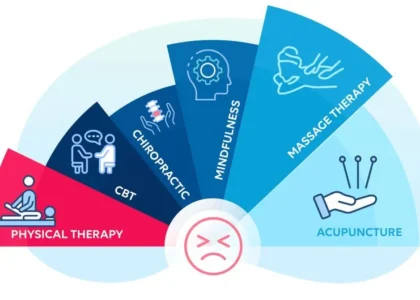
📌 Remember: Pain management works best when it is multimodal—combining medication with physical therapy, lifestyle changes, and other non-drug approaches whenever possible.
🚨 This content is for educational and informational purposes only. Tapentadol.org does not provide medical advice, diagnosis, or treatment. Always consult a licensed healthcare provider for medical concerns. If you are experiencing a medical emergency, call 911 immediately.